If you’ve been sitting most of the day and your hips feel locked up when you stand, the two stretches that give most people the biggest return are the kneeling low lunge and the couch stretch. Do the low lunge for 30–60 seconds per side to open the front of the hip, then progress to the couch stretch (back foot elevated on a couch or chair) when the low lunge feels easy. Add a 90/90 sit and a supported pigeon a few times a week and you’ve covered the main directions your hips need to move.
These are maintenance stretches — the goal is keeping the range of motion you already have so walking, gardening, golf, and getting off the floor stay comfortable. They’re not treatment for a specific injury, and if something sharp shows up, that’s a conversation for a physical therapist, not a blog post.
Below: how to do each stretch, then the small handful of props that actually make them easier on a 60-plus body.
Why Hips Get Tight From Sitting
When you sit, the hip flexors (mainly the psoas and rectus femoris) stay in a shortened position for hours. Muscles adapt to the position they’re held in most often. Stand up after a three-hour Zoom block and those muscles resist lengthening — which shows up as that “I need a minute” shuffle to the kitchen.
This isn’t damage. It’s just what tissue does. The fix is the same thing that caused it, in reverse: spend a little time each day putting those muscles in a lengthened position. Five to ten minutes is enough for most people. If sitting has also been leaving your hips achy rather than just stiff, there’s more on managing that in our guide to hip pain after sitting all day.
A few ground rules before the stretches:
- Warm first if you’re cold. A two-minute walk around the house is plenty.
- Hold, don’t bounce. 30–60 seconds per side, breathing normally.
- Stretch to tension, not pain. A 4–5 out of 10 sensation. If it’s sharp, back off.
- Consistency beats intensity. Five minutes daily does more than 30 minutes once a week.
The Five Stretches
1. Kneeling Low Lunge
The best starting point. Kneel on one knee, other foot forward with the knee stacked over the ankle. Tuck your tailbone slightly (this matters — without the tuck you’re just arching your low back). Shift your hips forward until you feel a stretch in the front of the back hip. Hold 30–60 seconds. Switch sides.
Pad the down knee. A folded towel works; a proper mat or kneeling pad works better.
2. Couch Stretch
The low lunge, progressed. Same position, but rest the top of your back foot on a couch cushion, ottoman, or low chair. This adds a quad stretch to the hip flexor stretch and is genuinely challenging. Start with just a few inches of elevation.
Skip this one if you have knee issues that don’t tolerate deep knee bending. Stick with the low lunge.
3. 90/90 Hip Stretch
Sit on the floor with your front leg bent 90 degrees in front of you and your back leg bent 90 degrees to the side. Sit tall. Gently lean forward over the front shin. This targets rotation — a range of motion that quietly disappears from years of chair-sitting.
Most people over 60 need to sit on a block or a firm cushion to get upright in this position. That’s normal, not a failure.
4. Supported Pigeon
Bring one shin forward across a couch, bed, or low bench (waist height or lower). The trailing leg extends straight behind you. Lean gently over the front shin. This opens the outer hip.
Using furniture instead of the floor keeps it accessible. Floor pigeon is intense and unnecessary for maintenance work.
5. Standing Kneeling Reach (Overhead Lunge Reach)
Standing version for when you can’t get on the floor — useful at the office. Step into a lunge, back leg straight, and reach the arm on the same side as the back leg overhead and slightly across your body. Hold 20–30 seconds. This is the one to do at your desk mid-morning and mid-afternoon.
Props That Actually Help
You don’t need much. But a few pieces of gear make these stretches meaningfully more comfortable, which means you’ll actually do them.
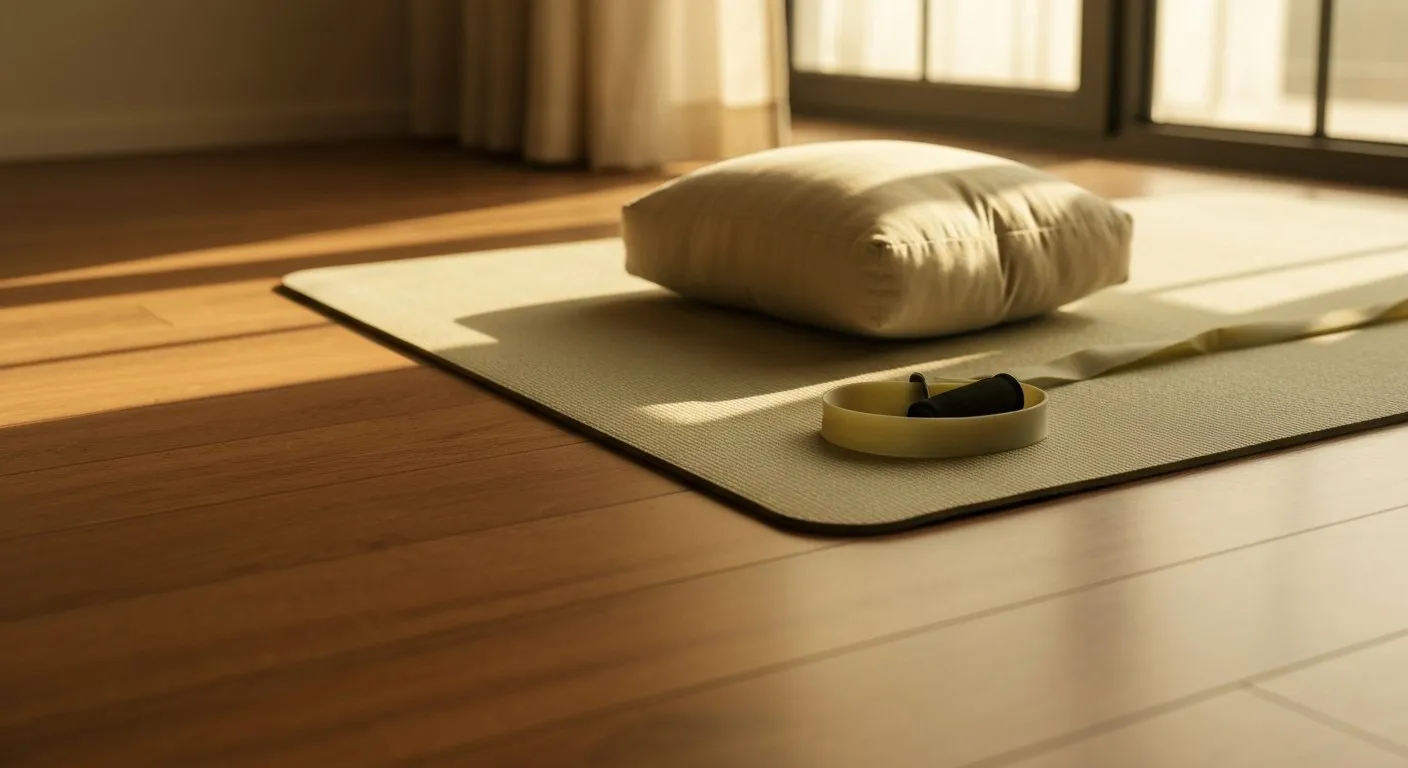
Extra-Padded Yoga Mat (¼–½ inch thick)
Standard yoga mats are too thin for kneeling. A ½-inch mat protects the knees during the low lunge and couch stretch. Look for something in the 6–10mm range — thicker than a hot-yoga mat, but still stable enough that you’re not sinking in during standing work.
Best for: Anyone doing the kneeling stretches on a hard floor. Skip if: You’ll do all stretches on carpet or a rug — you may not need it.
Foam Roller (Mid-Density, 18-inch)
Not a stretch itself, but a useful warm-up before stretching. Rolling the front of the thighs and outer hips for 60–90 seconds can make the stretches that follow feel less restricted. A mid-density roller (not the aggressive knobby kind) is right for most people over 60.
Best for: Anyone who feels stiff even a few minutes into stretching. Skip if: You bruise easily or find rolling more painful than helpful — some people just don’t respond to it.
Yoga Blocks (Set of Two, Foam)
The single most useful prop for the 90/90 stretch. Sitting on a block raises your hips above your knees, which lets you actually sit upright rather than rounding backward. Also useful under the front hip in supported pigeon.
Foam blocks are lighter and gentler than cork. A set of two is standard.
Best for: Anyone whose 90/90 feels impossible without support. Skip if: You’re comfortable sitting cross-legged on the floor with a straight back — you probably don’t need them.
Resistance Band Set (Light to Medium)
A long looped band gives you something to hold onto for balance during standing hip openers, and lets you do assisted supine stretches (lying on your back, band around one foot, gently drawing the leg across the body) that are easier on the low back than floor pigeon.
Get a set with multiple tension levels — you’ll use the lighter ones for stretching, and the heavier ones later if you decide to add some strengthening.
Best for: Anyone who prefers lying-down stretches to kneeling ones. Skip if: You’ve already got bands at home. They all basically do the same job.
Frequently Asked Questions
How often should I do these? Daily is ideal, even if it’s just five minutes. Range of motion is a use-it-or-lose-it situation, and small daily doses beat long weekend sessions.
How long until I notice a difference? Most people feel less stiffness within a week or two of consistent daily stretching. Actual range-of-motion gains take longer — six to eight weeks of regular work is a fair benchmark.
Should I stretch before or after walking? After is generally better for these hip stretches. Cold hip flexors don’t lengthen as well, and a short walk is a fine warm-up. A dynamic warm-up (a few standing lunges, marching in place) is fine before walking; save the long holds for after.
What if I can’t get down to the floor? The standing overhead lunge reach and the couch stretch (using a low chair) cover most of the same territory. You can also do a supported low lunge with your hands on a chair for balance. Skipping the floor entirely is fine. If getting up and down from the floor itself is the sticking point, our guide on getting up from the floor without using your hands is worth a read.
Is a foam roller worth it if I already stretch? Optional. Some people find rolling before stretching helps them get deeper into the position; others don’t notice a difference. Try it for two weeks — if the stretches feel the same with or without rolling, you don’t need the roller.
Can tight hips affect my back or knees? Often, yes — the hips sit between them and influence both. Tight hip flexors can tilt the pelvis forward, which changes how the low back and knees load during walking. It’s part of why maintenance stretching matters even when the hips themselves aren’t the thing that hurts. This overlaps with what we cover in the piece on walking long distances with knee issues.
Bottom Line
Start with the kneeling low lunge and the 90/90 — those two cover the biggest gaps most desk-sitters have. Add the couch stretch and supported pigeon once the basics feel easy, and keep the standing overhead lunge in your back pocket for office days. A padded mat and a pair of foam blocks are the only props most people actually need; everything else is optional. Five minutes a day, most days, is enough to keep your hips ready for whatever you want to do with them.